 866-774-3342
 info@pridereadingtutors.com
If you’ve noticed your fourth grader suddenly struggling with reading, even though they were doing just fine in second or third grade, please know you’re not imagining things. This phenomenon is so common it has a name: the 4th grade reading slump. And if you’ve been frantically typing “reading tutoring near me” into your search bar at 11 PM, wondering what happened to your once-confident reader, you’re absolutely not alone.
The wonderful news is that this slump isn’t a reflection of your child’s intelligence or potential. It’s actually a predictable shift in how schools teach reading, and with the right support, your child can absolutely thrive again.
The Big Shift: From “Learning to Read” to “Reading to Learn”
Here’s what’s happening in your child’s classroom right now. For kindergarten through third grade, the primary focus was on “learning to read”, decoding words, recognizing sight words, and building basic fluency. Think of it like learning the mechanics of riding a bike.
But around fourth grade, schools make a massive pivot to “reading to learn.” Suddenly, your child isn’t just reading stories anymore. They’re expected to pull information from textbooks, analyze complex sentences, and understand content across subjects like science and social studies. The training wheels come off, and now they’re expected to ride uphill.
According to research from the International Dyslexia Association, this transition catches many students off guard because the cognitive demands are completely different. It’s not just about sounding out words anymore, it’s about comprehension, vocabulary, inference, and stamina.
Why the Slump Happens (And Why It’s Not Your Fault)
Several factors collide right around fourth grade to create this perfect storm:
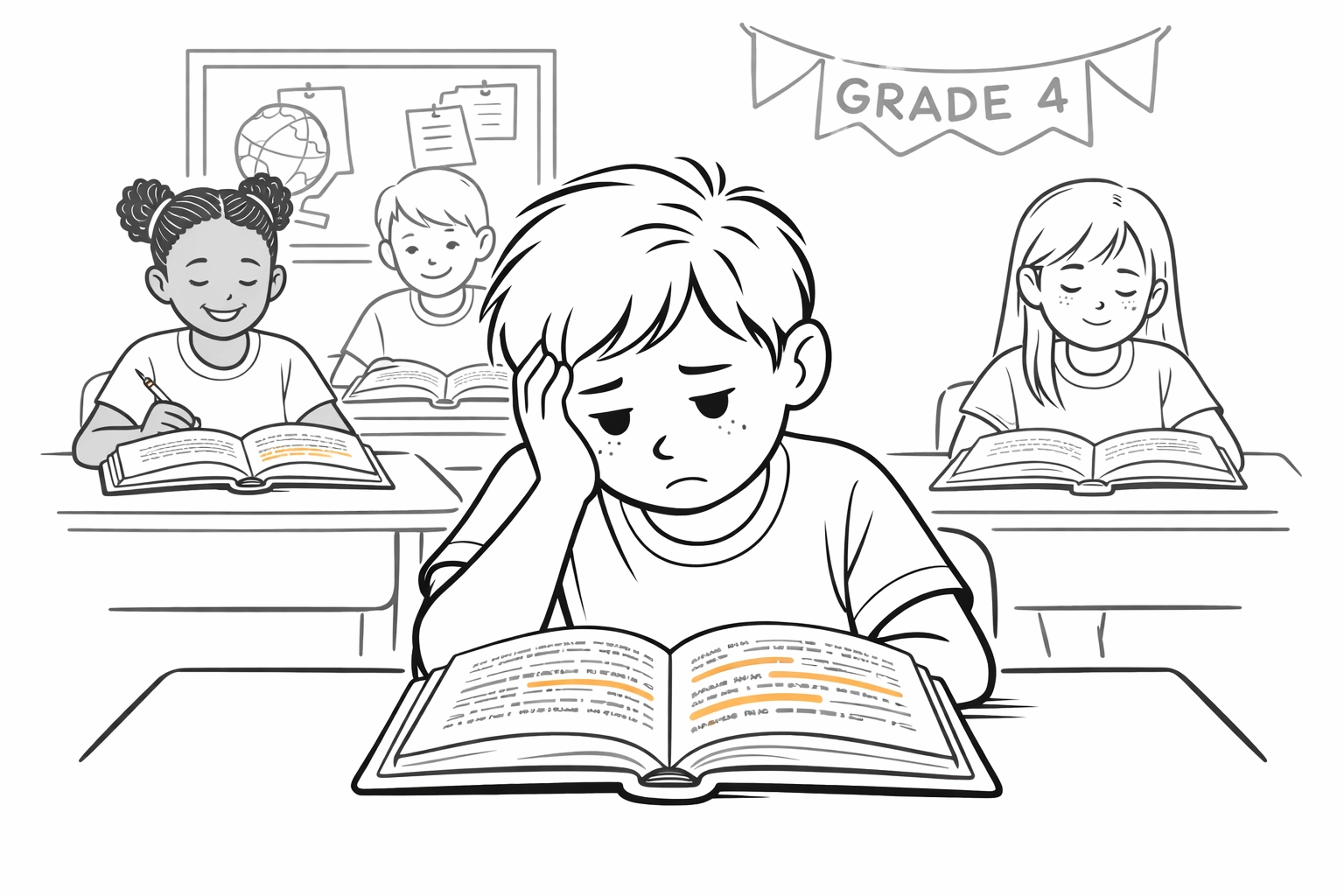
The text gets harder, fast. Books shrink their fonts. Pictures disappear. Suddenly, your child is staring at pages packed with dense paragraphs and multisyllabic words like “photosynthesis” and “revolutionary.” Here’s the kicker: most schools stop teaching decoding skills after second grade, right when kids need them most to tackle these longer, more complex words.
Support gets pulled away. Teachers often assume that by fourth grade, students “get it.” If your child needed extra reading help in second grade, they might not receive that same level of support in fourth and fifth grade, even though they still need it. This withdrawal of scaffolding can cause struggling readers to fall further behind.
The mental load becomes exhausting. When a child hasn’t developed fluency and automaticity, they’re using so much brainpower just to decode individual words that there’s little cognitive capacity left for actually understanding what they’re reading. Imagine trying to have a conversation in a language you barely speak, by the end, you’re exhausted and can’t remember what was even said.
Vocabulary gaps widen. Students from homes with less access to vocabulary-rich conversations and books often hit this slump harder. The academic language in fourth-grade texts assumes knowledge that not all kids have been exposed to yet.
Why “Reading Tutoring Near Me” Might Be Your Best Move Right Now
When parents start searching for “reading tutoring near me,” they’re instinctively onto something important: personalized, local support matters, especially during this critical transition period.
Here’s why proximity and personalization are game-changers:
Someone who knows your child. A tutor who meets your child where they are, whether in your home, or online with a personalized approach, can identify the specific gaps holding them back. Maybe they need more work with multisyllabic words. Maybe their comprehension strategies are weak. A one-size-fits-all classroom can’t always pinpoint these nuances.
Consistent, focused attention. In a classroom of 25+ students, your fourth grader might get five minutes of individualized help per week. A reading tutor provides dedicated time to work on exactly what your child needs, building skills systematically without the distractions or pace pressures of a full classroom.
Emotional safety to struggle. Many kids in fourth grade are starting to feel “dumb” compared to their peers. They see other kids breezing through chapter books while they’re still stumbling. A tutor creates a judgment-free zone where it’s safe to make mistakes, ask questions, and rebuild confidence. That emotional component can’t be overstated.
Intervention before it’s too late. Research consistently shows that early intervention is critical. Without support, struggling readers develop negative attitudes toward reading that persist through high school. Catching this slump now, in fourth or fifth grade, prevents years of frustration and academic struggle down the road.
What to Look for When You Search “Reading Tutoring Near Me”
Not all reading tutors are created equal, especially when you’re dealing with the unique challenges of the fourth-grade transition. Here’s what actually matters:
Evidence-based methods. Look for tutors trained in structured literacy approaches like Orton-Gillingham or programs grounded in the Science of Reading. These methods explicitly teach the skills schools often assume kids have already mastered. The PRIDE Reading Program is one example of a systematic, multisensory approach designed specifically for students who need more explicit instruction in decoding, fluency, and comprehension.
Experience with this age group. Fourth graders aren’t just older second graders. They need tutors who understand the specific cognitive leap that happens at this stage and who can teach reading comprehension strategies, not just phonics.
Progress monitoring. A quality tutor should be able to show you measurable progress over time, whether that’s increased reading speed, better comprehension scores, or your child’s growing confidence. You shouldn’t be guessing whether it’s working.
Connection with school. Ideally, your tutor should be willing to communicate with your child’s teacher to ensure everyone is working toward the same goals. This team approach prevents mixed messages and reinforces learning across settings.
Flexibility in format. Whether you need someone to come to your home, or a high-quality online option, the format should fit your family’s reality. Consistency matters more than location, so choose what you can actually sustain long-term.
Breaking the Cycle of Struggle
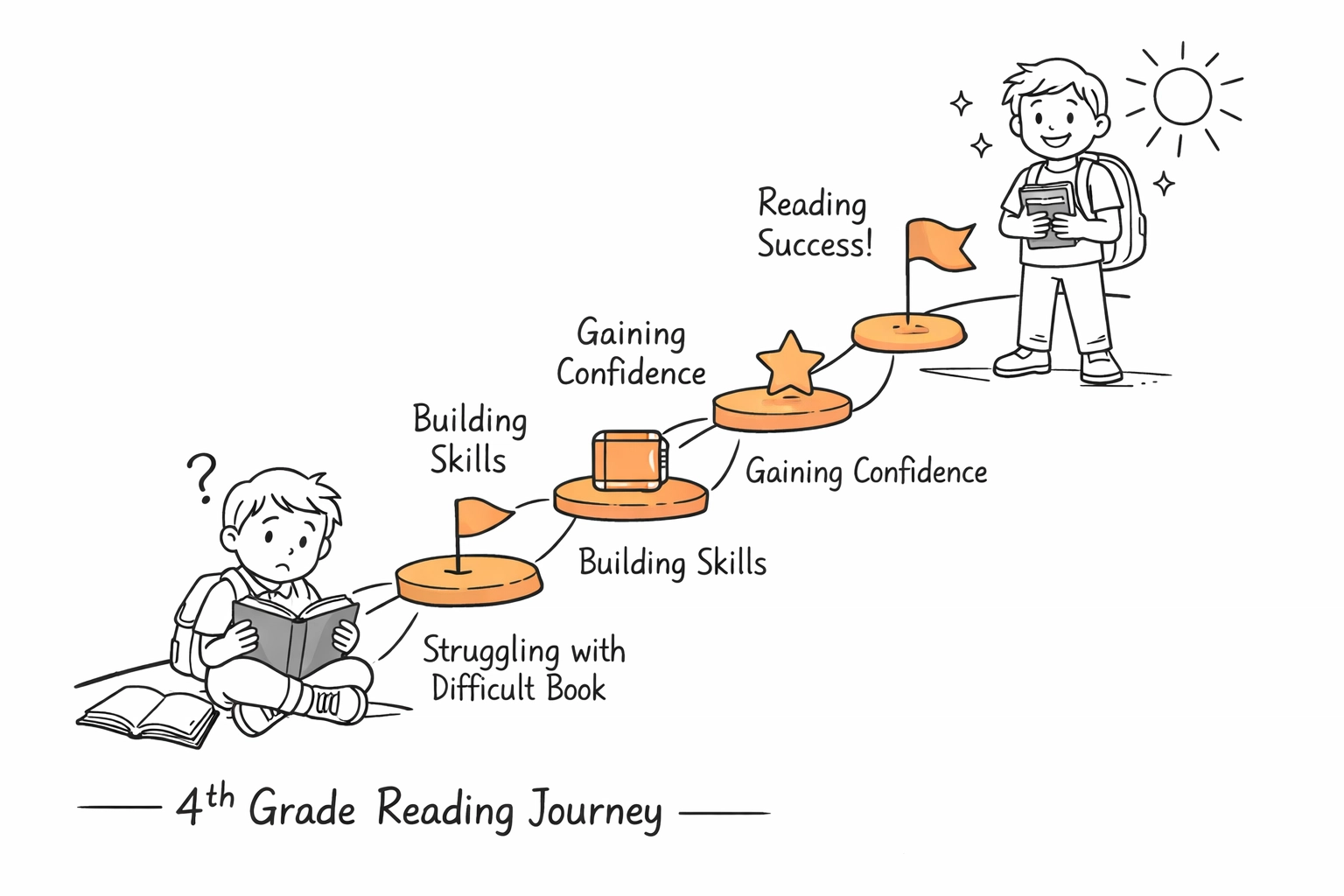
Once you’ve found the right reading support, what happens next? The beautiful thing is that reading skills are absolutely teachable, even when a child has fallen behind. With systematic instruction, most students can catch up and even surpass their peers.
Here’s what effective tutoring typically addresses:
Advanced phonics and word attack skills. Tutors fill in the gaps in decoding multisyllabic words that schools may have glossed over. Your child learns strategies to break down long words into manageable chunks.
Fluency building. Through repeated reading and prosody practice, kids develop the automaticity they need so that reading doesn’t exhaust them. When decoding becomes effortless, comprehension finally has room to grow.
Comprehension strategies. Tutors teach active reading techniques, how to predict, question, visualize, and summarize. These strategies turn passive word-calling into true understanding.
Vocabulary expansion. Targeted vocabulary instruction helps fill the knowledge gaps that make fourth-grade texts so challenging.
Confidence restoration. Perhaps most importantly, tutoring gives kids repeated experiences of success, which rebuilds their identity as readers.
Frequently Asked Questions
What is the 4th grade reading slump?
The 4th grade reading slump is a documented phenomenon where students experience a decline in reading progress around ages 9-10, even if they previously performed well. It occurs when schools shift from teaching students to read (decoding focus) to expecting them to read to learn (comprehension and content focus).
Why does my child struggle more in 4th grade than they did in 2nd grade?
Fourth grade introduces denser texts, smaller fonts, fewer pictures, and significantly more complex vocabulary, right when schools typically reduce explicit reading instruction. Students who haven’t fully mastered decoding and fluency find themselves overwhelmed by the new cognitive demands.
How can a reading tutor help with the 4th grade slump?
A reading tutor provides personalized instruction in the specific skills your child needs, whether that’s advanced phonics, fluency, comprehension strategies, or vocabulary development. They offer consistent, focused attention that busy classrooms can’t always provide, helping students catch up before falling further behind.
What should I look for in a reading tutor for my 4th grader?
Seek tutors trained in evidence-based methods like Orton-Gillingham or Science of Reading approaches. They should have experience with this age group, provide progress monitoring, and ideally communicate with your child’s school. The tutor should also create an emotionally safe environment where your child feels comfortable taking risks.
Is online reading tutoring as effective as in-person tutoring?
Yes! Research shows that high-quality online tutoring can be just as effective as in-person support when it’s structured, personalized, and uses evidence-based methods. The key is consistency and a program designed specifically for virtual learning. Many families find online tutoring more convenient and sustainable long-term.
How long does it take to see improvement with reading tutoring?
Most students show measurable progress within 8-12 weeks of consistent tutoring (typically 2-3 sessions per week). However, closing significant gaps may take several months to a year, depending on how far behind a student has fallen. The important thing is that progress is steady and visible.
You’ve Got This (And So Does Your Child)
If your fourth grader is struggling, searching for “reading tutoring near me” is one of the smartest moves you can make. This slump is real, it’s common, and it’s absolutely addressable with the right support.
The students who get help during this critical window don’t just catch up: they often develop stronger reading skills and strategies than kids who never struggled at all. They learn resilience, self-advocacy, and the meta-cognitive skills that will serve them for life.
Your child’s reading journey isn’t over. It’s just entering a new chapter: and with personalized support, that chapter can have a happy ending. Whether you choose in-home tutoring, online sessions, or a local learning center, the important thing is taking that first step.
Because every child deserves to feel like a confident, capable reader. And with the right support at the right time, that’s exactly what they can become.
Ready to find the right fit for your fourth grader? Reach out to us to learn how personalized reading tutoring can help your child not just survive the fourth-grade transition: but truly thrive.