 866-774-3342
 info@pridereadingtutors.com
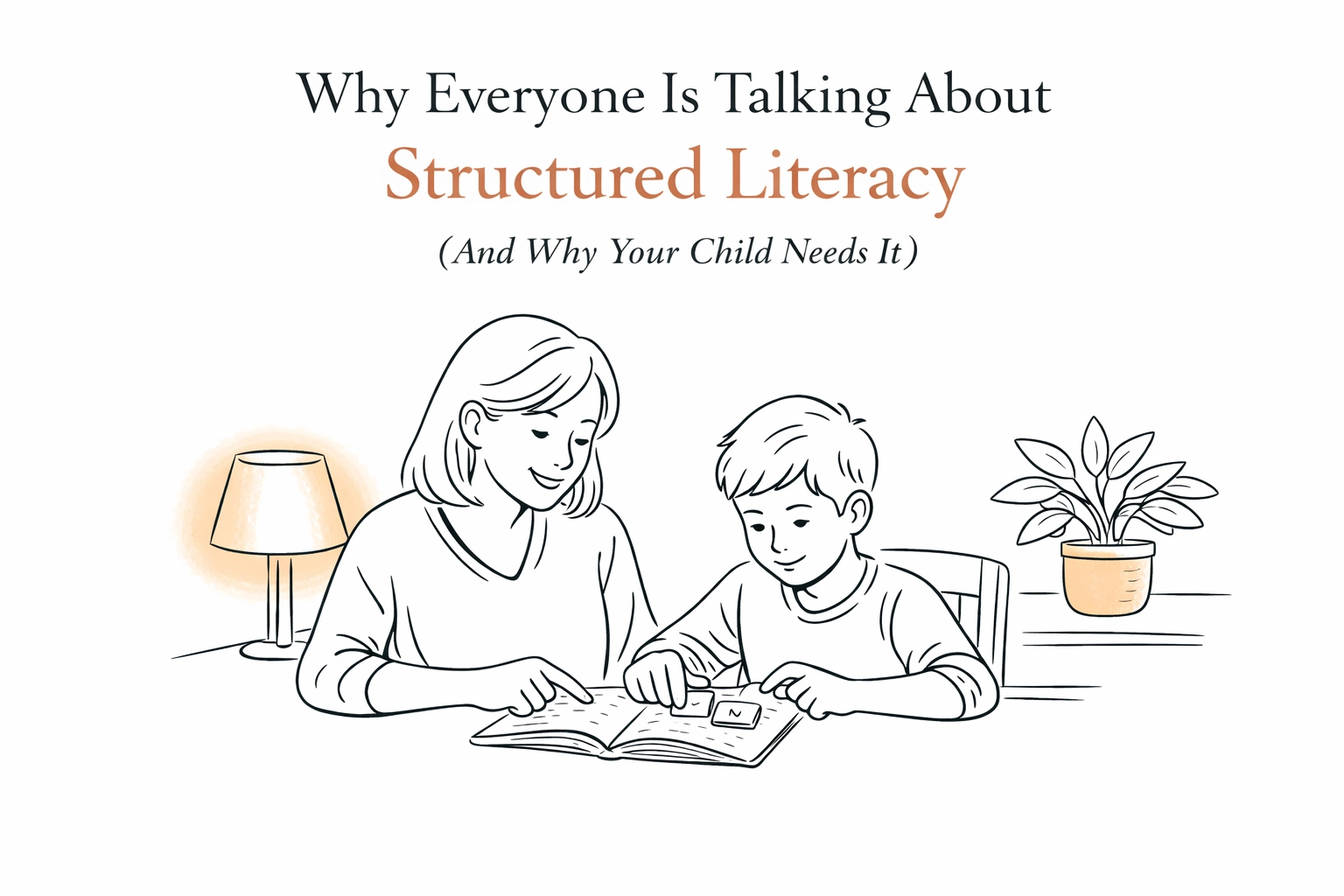
The Myth vs. Reality
If you’ve ever sat at the kitchen table with your child—watching them wrestle with a word they swore they knew yesterday—please know you’re not alone. I’ve talked with so many parents who describe the exact same moment: the deep sigh, the tears (sometimes yours, sometimes theirs), and that quiet question in your head: “What am I missing?”
Here’s what I want you to hear, right away: this struggle usually isn’t about effort or intelligence. It’s about instruction. Reading is not “natural” for the brain in the way spoken language is, so many kids need direct, systematic teaching to connect letters to sounds and blend those sounds into words.
The myth many of us grew up with sounds like this:
If you read to kids, surround them with books, and give it time… they’ll just pick reading up naturally.
Reading aloud and loving books is wonderful (and I’m a huge fan). But for a lot of kids—especially kids with dyslexia or other learning differences—exposure alone doesn’t build the foundation they need. And when instruction leans on strategies like “use the picture,” “guess the word,” or “look at the first letter and try,” it can feel like progress… until the wheels fall off.
If you’re wondering whether your child’s classroom is leaning on guessing, this is a great starting point: 7 signs your child’s school is guessing.

The Emotional Shift
Once you understand what’s really happening, something powerful changes—your child’s struggle stops feeling like a mystery (or a personal failure). And honestly? That shift can be a relief.
When reading is hard, kids start making meaning out of it:
- “I’m dumb.”
- “I can’t do this.”
- “Everyone else is better than me.”
And then you see the real-life stuff: homework battles, stomachaches before school, avoidance, shutdowns, or acting out. If that’s your house right now, I get it. It’s exhausting. And it’s heartbreaking.
This is where structured literacy makes a difference. It replaces guessing with a clear plan. It gives kids a path they can actually follow—like turning on the lights in a room that’s felt dark for a long time.
Here at PRIDE Reading Tutors, we see this emotional shift all the time. We watch students go from anxious and stuck… to steady, capable, and proud. Not because we “push” them harder—but because we finally teach reading in a way that makes sense.
And when families ask what that looks like in practice, we usually point them toward orton gillingham tutoring—because Orton-Gillingham is a structured, research-aligned approach that’s especially effective for struggling readers. It’s also multisensory (seeing, saying, hearing, and doing), which helps skills “stick.”
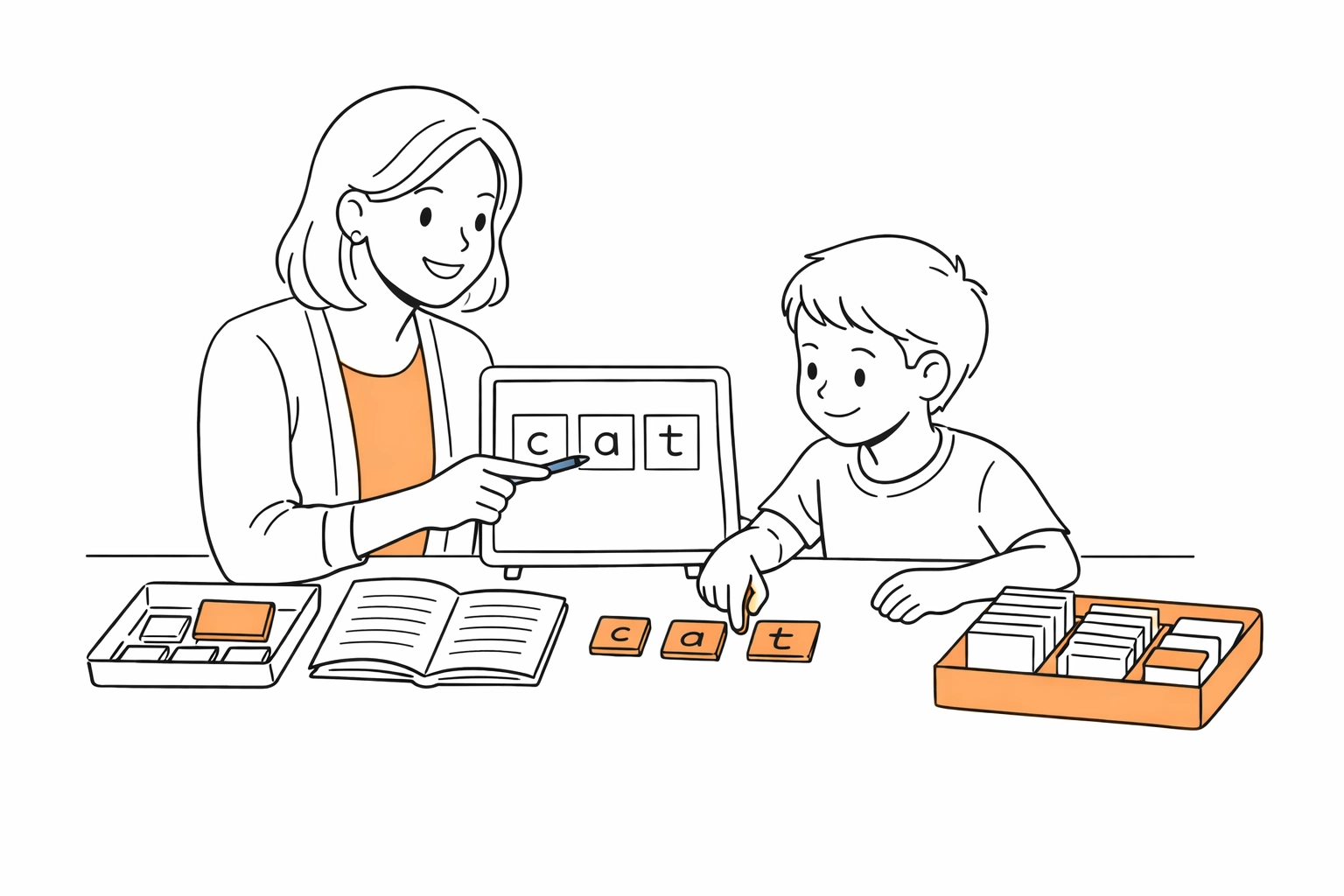
Flexibility for Modern Families
You shouldn’t have to choose between getting your child support and keeping your week from falling apart. We built our tutoring options around real life—work schedules, sibling pickup lines, sports practice, and all.
Online tutoring (nationwide)
Online can be a game-changer: consistent sessions, no commute, and access to the right reading specialist no matter where you live.
In-home tutoring (select locations)
Some students do best face-to-face, right in their home environment. In-home support can make it easier to build routines and keep things calm and familiar.
Specialty Instruction (SDI) for IEPs and 504 plans
If your child has an IEP or 504 plan, they may need instruction that’s specialized, documented, and aligned with their goals. We offer Specialty Instruction (SDI) to support that need.
Now, if you’re wondering, “Is my child too young for this?” I hear that a lot. And while every family’s timing is different, earlier is often easier—because you’re supporting the foundation before frustration has years to build.
If you’re seeing red flags in kindergarten or early elementary, this is a helpful next read: reading tutor for kindergarten.
Taking the Next Step
If your child is struggling, it can feel like you’re carrying it alone. You’re not. And your child isn’t broken. They may simply need a more structured, more supportive path into reading.
If you’re not sure what you’re seeing “counts” as a concern, start small. Take our free quiz. It’s a simple way to get clarity and decide what you want to do next—no pressure.
And if you’d like to talk through what support could look like for your child, we’re here. At PRIDE Reading Tutors, we partner with families using evidence-based, structured instruction that builds skills and rebuilds confidence—so reading doesn’t have to be the daily fight it is right now.