 866-774-3342
 info@pridereadingtutors.com
If you've spent yet another evening watching your child wrestle with their spelling homework—sounding out words they can read, mixing up letters, or spelling the same word three different ways on one page—you’re not imagining things. And please know: you’re not alone in wondering why spelling feels like an impossible mountain to climb when reading seems to be going okay.
Here’s what many parents don’t realize (and what I wish more schools explained upfront): spelling struggles are usually a reading problem in disguise. Reading (decoding) and spelling (encoding) are two sides of the same coin—both depend on how well your child connects sounds to letters.
If you’re looking for Orton-Gillingham tutoring or a qualified dyslexia tutor, you’re already on the right track. The wonderful news is that once you understand this connection, you can address both reading and spelling at the same time with the right approach. Let me walk you through what’s really happening—and how Orton-Gillingham can transform both your child’s reading and spelling.
Spelling Struggles & Reading: The Hidden Connection (Decoding vs. Encoding)
Think about what happens when your child reads a word. Their brain has to decode it, recognizing the letters, connecting them to sounds, and blending those sounds together to form a word they understand. That's reading, or what educators call "decoding."
Now flip that process around. When your child spells a word, their brain has to encode it, hearing the sounds in the word, segmenting them into individual phonemes (the smallest units of sound), and then matching each sound to its correct letter or letter pattern. That's spelling, or "encoding."
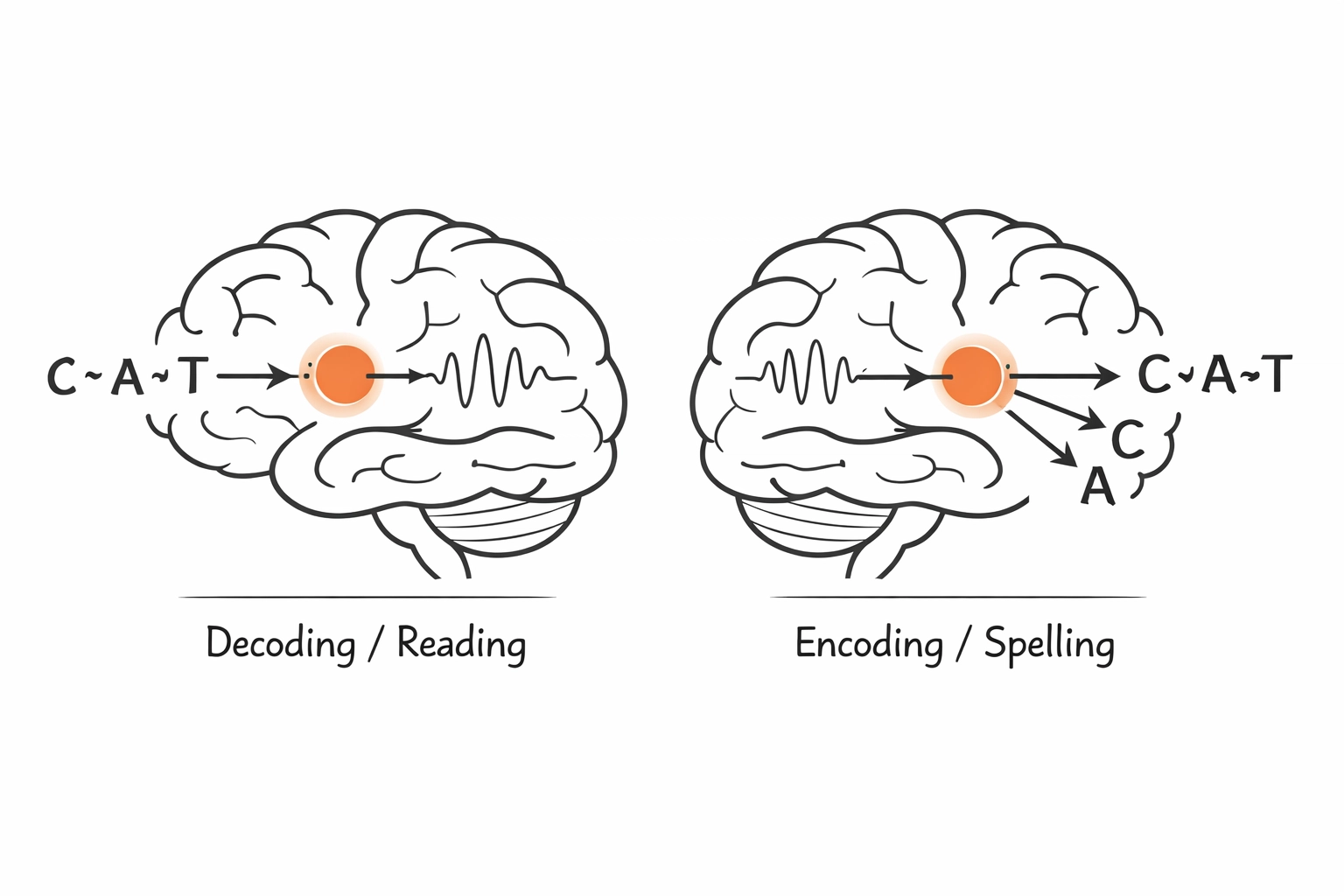
Here's the key: both of these skills rely on the exact same foundation, understanding how sounds map to letters in our language. When a child struggles with spelling, they're typically struggling with this fundamental sound-symbol relationship, which means they're also likely compensating in their reading, even if it's not obvious yet.
Research tells us that about 86% of English words actually follow consistent, predictable patterns. Only about 4% are truly irregular. So when kids are inventing creative spellings or guessing at letter combinations, it often means they haven't been explicitly taught these patterns, and that gap shows up in both reading and spelling.
Spelling Struggles Often Start With Phonological Awareness
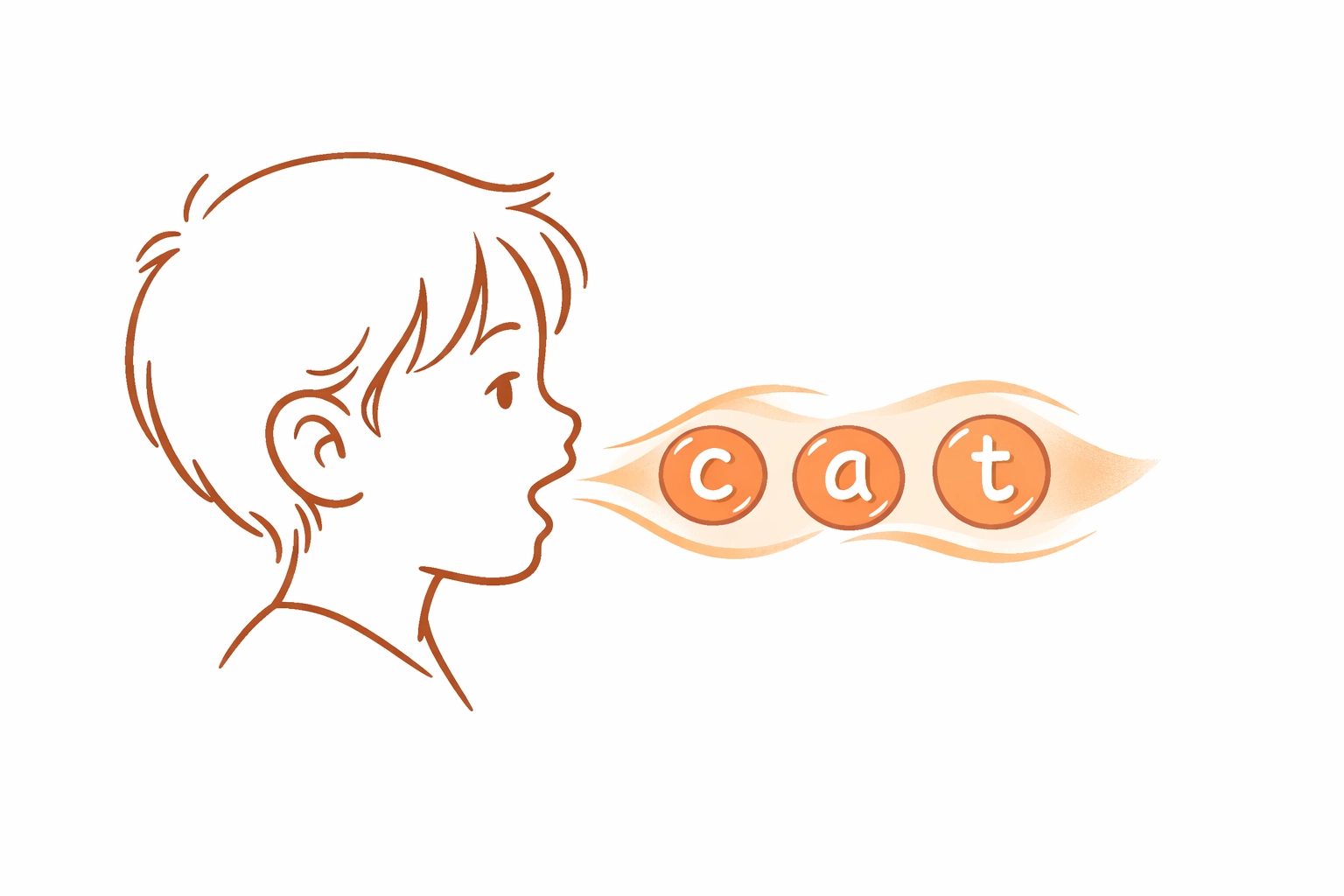
Let's talk about phonological awareness for a moment, because this is where the whole reading-spelling puzzle comes together. Phonological awareness is simply your child's ability to hear, identify, and manipulate the individual sounds in spoken words, before any letters are even involved.
Can your child hear that "cat" has three separate sounds? Can they tell you what word you'd have if you took the /k/ sound off "cat"? Can they blend /d/-/o/-/g/ into "dog" when you say the sounds separately?
If these tasks feel tricky for your child, that's the root of both their reading and spelling challenges. And it's completely understandable, some children pick up these sound awareness skills naturally, while others need explicit, systematic teaching to develop them.
When phonological awareness is weak, reading becomes a guessing game based on context clues and memorized word shapes. Spelling becomes a shot in the dark. This daily struggle often leads to frustration, avoidance, and that heartbreaking moment when your bright, capable child starts saying "I'm just bad at reading."
Orton-Gillingham Tutoring: A Different Approach for Spelling Struggles
So, how does Orton-Gillingham tutoring address all of this? Let me tell you why this approach is so different, and so effective.
The Orton-Gillingham (O-G) method was specifically designed for students with dyslexia and other reading differences, but it benefits any child who's struggling with the reading-spelling connection. It's a structured, sequential, and multisensory approach that teaches reading and spelling as integrated skills from the ground up.
Here's what makes it work:
It's systematic and cumulative. O-G doesn't skip around or expect children to figure out patterns on their own. It starts with the most basic sound-symbol relationships and builds systematically, introducing one new concept at a time and continually reviewing what's been learned. Each lesson builds on the last, so there are no gaps in understanding.
It teaches reading and spelling together. In every O-G lesson, students practice both decoding (reading) and encoding (spelling) the same patterns. They're not treated as separate subjects. When a child learns that the letters "sh" make the /sh/ sound, they immediately practice both reading words with "sh" and spelling words with that sound. This reinforces the two-way connection between sounds and symbols.
It's multisensory. This is crucial. O-G engages multiple pathways in the brain simultaneously, visual (seeing the letters), auditory (hearing the sounds), and kinesthetic (writing the letters, tapping out sounds, using manipulatives). For instance, a student might trace sandpaper letters while saying the sound, creating multiple memory connections that make learning stick.
It's explicit and direct. There's no guessing, no "use the picture to figure it out," no memorizing word shapes. Every phonics rule, every spelling pattern, every syllable type is taught directly and practiced until it becomes automatic.
How Orton-Gillingham Fixes Reading + Spelling Struggles (Together)
Let me paint you a picture of what this looks like in practice, because understanding the mechanics helps you see why it's so transformative.
When working with a dyslexia tutor or reading tutor who uses the Orton-Gillingham method, your child might start a lesson by reviewing previously learned sounds with flashcards, seeing the letters and saying the sounds aloud. Then they might spell those same sounds they just reviewed, writing them on paper or building them with letter tiles while saying the sounds.
Next, they'll learn a new concept, maybe the spelling rule that we use "ck" at the end of short vowel words, like "back" and "stick." They'll practice reading words with this pattern, then immediately practice spelling words that follow the same rule. The tutor might have them tap out the sounds in "pack" on their fingers before writing it, connecting the physical movement to the phoneme segmentation.
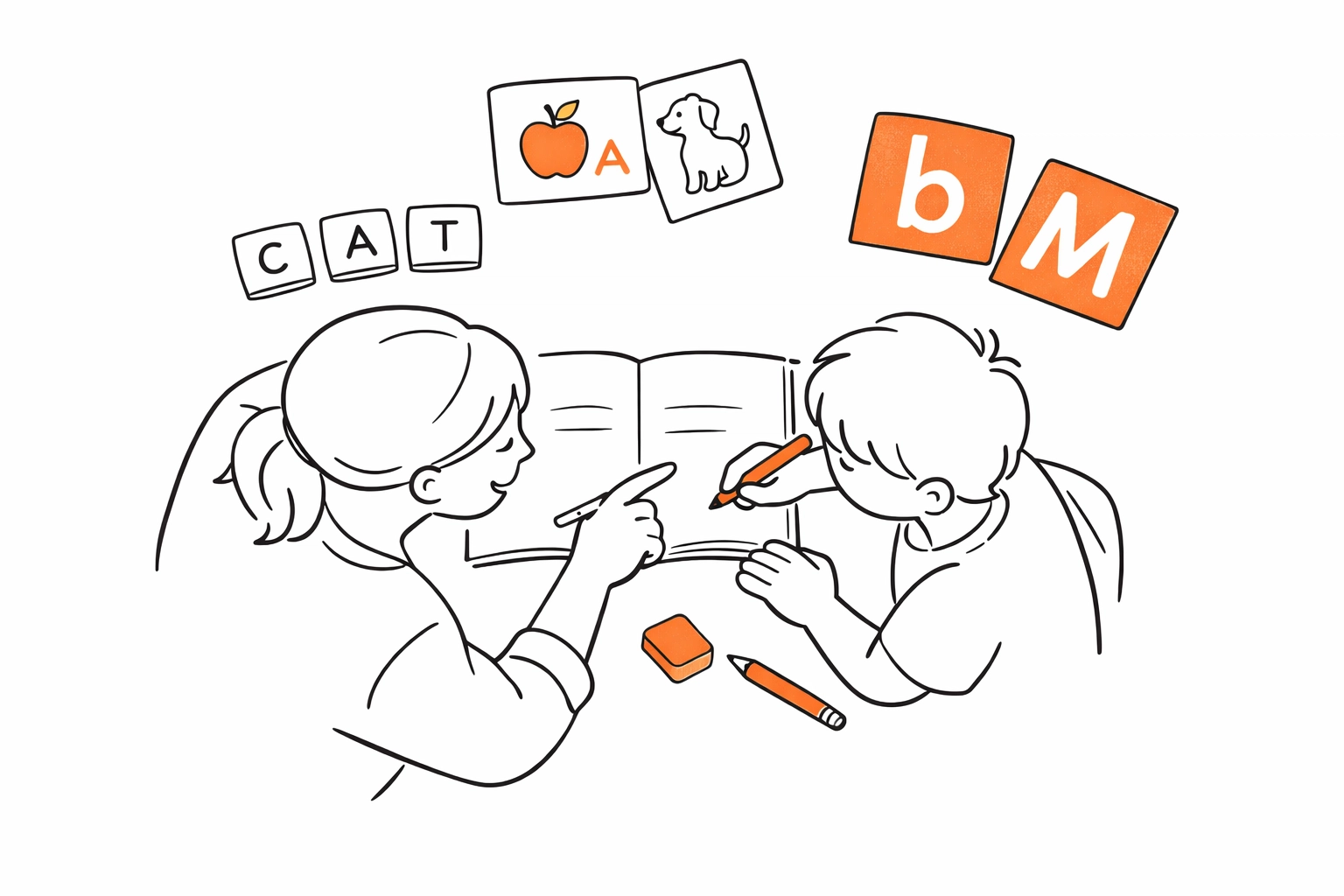
What's happening here? Your child is building that critical sound-symbol mapping in both directions simultaneously. They're developing phonological awareness (hearing and manipulating sounds) while connecting those sounds to their written representations, and they're doing it through multiple senses so the learning embeds deeply.
Over time, this systematic approach fills in all those gaps that created the spelling struggles in the first place. Your child stops guessing and starts knowing. They develop the underlying skills that make both reading and spelling feel manageable instead of mysterious.
What Orton-Gillingham Tutoring Can Mean for Your Child
Here's what often happens when children receive quality Orton-Gillingham tutoring: their spelling improves noticeably, yes, but you'll also see their reading fluency increase, their confidence soar, and their willingness to tackle harder texts grow. That's because you're not just addressing surface-level symptoms; you're building the foundational skills that support all literacy development.
Parents frequently tell us they've noticed their child actually enjoys reading for the first time, or that homework battles have decreased dramatically. These aren't small wins, they're transformative shifts that affect your child's entire academic trajectory and self-image.
And critically, early intervention makes a tremendous difference. Whether your child is in kindergarten just starting to struggle or in third grade already behind their peers, our Orton-Gillingham tutoring online can meet them exactly where they are and move forward systematically.
Finding the Right Orton-Gillingham Support for Spelling Struggles
If you're recognizing your child in this description, you might be wondering what to do next. A great starting point is looking for reading tutoring near me that specifically mentions Orton-Gillingham training. Not all tutors are trained in this method, and the training matters, it's a specific, structured approach that requires specialized preparation.
Here at PRIDE Reading Tutors, all of our specialists are trained in Orton-Gillingham and related structured literacy approaches. We work with students both through in-home Orton-Gillingham tutoring and online sessions, providing that intensive, individualized instruction that helps children finally crack the code of reading and spelling. We've seen countless students move from frustration to confidence once they receive the right kind of systematic, multisensory instruction.
When you're evaluating programs or tutors, look for these key elements:
- Explicit training in Orton-Gillingham or other structured literacy approaches
- One-on-one or very small group instruction (this work requires individualization)
- A diagnostic assessment to identify exactly where the gaps are
- Regular practice of both reading and spelling in each session
- Progress monitoring to ensure your child is actually improving
While this blog can't provide a diagnosis, that requires assessment by a qualified professional, it can help you understand what questions to ask and what to look for in effective intervention.
Moving Forward Together
The connection between spelling and reading challenges isn't always obvious at first, but once you see it, everything clicks into place. Your child isn't struggling with two separate problems that require two different solutions. They're dealing with one underlying challenge with how sounds and symbols connect—and that challenge has an evidence-based solution.
Orton-Gillingham tutoring provides systematic, explicit, multisensory instruction that helps children build these foundational skills from the ground up. It treats reading and spelling as the integrated, reciprocal skills they actually are. And most importantly, it gives children the tools they need to become confident, capable readers and spellers who actually understand how our written language works.
If you've been watching your child struggle, feeling helpless or confused about why nothing seems to help, please know there's a path forward. The right support can absolutely make a difference. Your child’s spelling struggles are pointing you toward the real issue—and now you know exactly what kind of help to look for.
Want to learn more about how Orton-Gillingham instruction could help your child? Reach out to us for a free consultation. Let's talk about where your child is right now and create a plan to help them thrive.
Quick Summary & FAQ
Quick summary: Spelling is “writing what you hear” (encoding) and reading is “saying what you see” (decoding). When the sound-to-letter connection is shaky, kids often struggle with both. Orton-Gillingham tutoring strengthens that connection with explicit, structured, multisensory lessons—so progress tends to show up in reading, spelling, and confidence.
FAQ: Is spelling really connected to reading?
Yes—very. Spelling and reading rely on the same core skill: mapping sounds (phonemes) to letters/patterns (graphemes). If spelling is hard, it’s often a sign your child needs more direct instruction in that sound-symbol system.
FAQ: What is Orton-Gillingham tutoring?
Orton-Gillingham tutoring is a structured literacy approach that teaches phonics, spelling patterns, and reading skills in a clear sequence, with lots of review and multisensory practice (seeing, hearing, saying, and writing).
FAQ: Should I look for a dyslexia tutor?
If your child shows signs of dyslexia (persistent trouble with decoding, spelling, and sound awareness), working with a trained dyslexia tutor can be a great next step. A formal diagnosis requires an evaluation, but you don’t need to “wait and see” to start evidence-based instruction.
FAQ: How do I choose the right tutor?
Look for: Orton-Gillingham/structured literacy training, diagnostic assessment, explicit spelling + reading instruction in every session, and consistent progress monitoring. If you need flexibility, Orton-Gillingham tutoring online can be a strong fit for many families.
FAQ: Do you support students with IEPs or 504 plans?
Yes. If your child needs specialized instruction aligned with school accommodations, ask about our Specialty Instruction (SDI) support.